
The history of slate in Latvia
Asbestos-cement (“slate”) roofing sheets were once a cheap, fireproof and long-lasting roof covering, and so they came to cover a large share of buildings in Latvia’s countryside and towns. Today the very same material is hazardous waste. State support for disposing of it is limited: in 2026, free collection was available to Latvian Honorary Families.[1]
Eternit: the “eternal” material
Asbestos-cement sheets were patented in 1900 by the Austrian Ludwig Hatschek. The product was named Eternit, from the Latin aeternus, “eternal”.[2] The Latvian word for it, šīferis, comes from the German Schiefer (slate): roofs used to be covered with natural slate, and the new material replaced it.
Asbestos cement went into wider production after the First World War. In the 1920s corrugated sheets appeared in Europe and America, corrugated by hand at first but by machine by the 1930s. Asbestos was mined mainly in Canada, the USSR (the Urals) and South Africa.[2]
The slate industry in Latvia
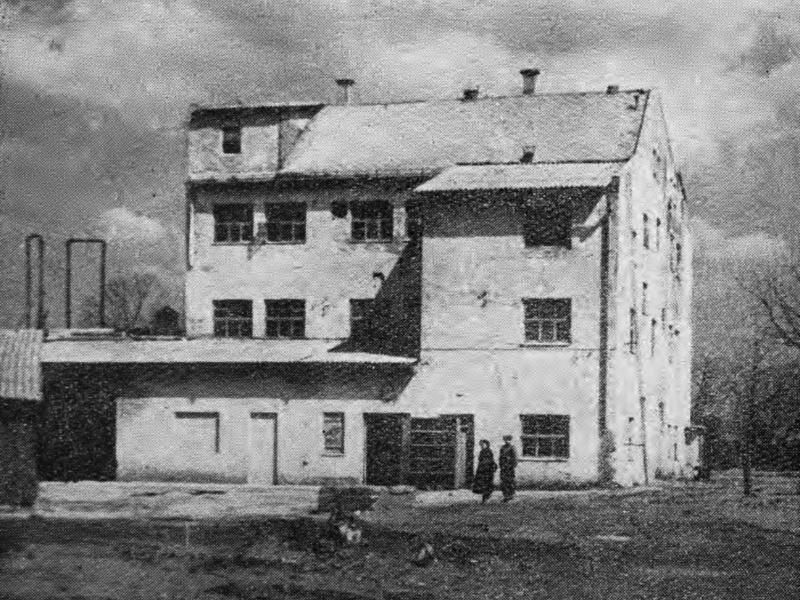
- before 1935Slate (Eternit) is imported. An attempt to produce it in Daugavpils fails.[2]
- 1935The Ministry of Agriculture builds a slate factory in Riga next to the cement works. In its first year it produces 0.9 million standard sheets, sold under the name “šīferīts”. It also makes sewer and water pipes, troughs, tanks and asbestos paper.[2]
- 1938The factory is taken over by the joint-stock company “Šīferis”, which builds a second, modern factory in Brocēni. It produces only corrugated slate.[2]
- 1939Production reaches 13.7 million sheets a year.[2]
- 1941–1944During the war the factories operate on a limited scale and asbestos is replaced with cellulose and waste paper. These products are less durable.[2]
- 1950–1963Rapid growth: Brocēni becomes the largest producer. In 1963 it makes 66 million sheets, out of a Latvian total of 94 million sheets a year.[2]
- 2000–2006The sale and use of asbestos are banned in Latvia (Cabinet Regulation No. 158, in force from 1 January 2001) and throughout the EU (2005). The EU bans its extraction and manufacture in 2006.[3][4]
Production volumes 1935–1963
In 1938, producing 1,000 standard slate sheets used around 1,247 kg of cement and 124 kg of asbestos. In other words, asbestos made up roughly a tenth of the combined cement and asbestos mass.[2]
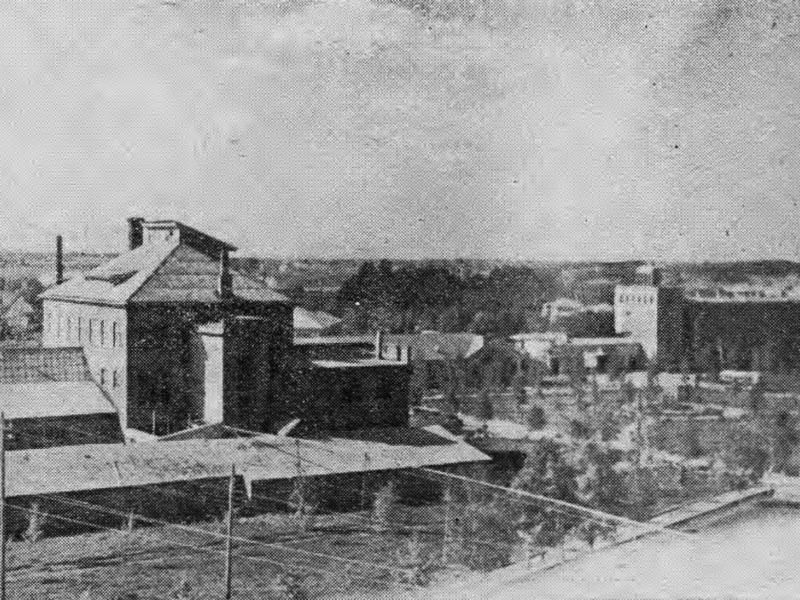
The legacy today
Production also took its toll on workers’ health. In 1994–1995, the Brocēni research project registered 9 cases of asbestosis among workers at the slate plant. Some of these patients entered the register under the general diagnosis of “pneumoconiosis”, because they had been exposed to both cement and asbestos dust.[7] More on the Health page.
Slate roofs are reaching the end of their service life and are being replaced on a massive scale. That is why it is now important for old slate to end up at a landfill rather than in a forest, a pothole or a garden bed. To find out how to do this safely, read Slate at home.
Sources
- KEM / LV portāls: Latvijas Goda ģimenēm pieejams atbalsts azbestu saturošā šīfera nodošanai [Support available to Latvian Honorary Families for disposing of asbestos-containing slate] (2026)
- I. Grosvalds, R. Grāvelsiņš (Rīgas Cementa un šīfera rūpnīca [Riga Cement and Slate Factory]). Par tehnikas vēsturi Latvijas PSR, VI [On the history of technology in the Latvian SSR, vol. VI]. Riga, 1964
- Valsts darba inspekcija: Azbests [State Labour Inspectorate: Asbestos] (information material)
- I. Banduch, L. Lißner (Kooperationsstelle Hamburg IFE). Azbesta izraisītās arodslimības Centrālās un Austrumeiropas valstīs: kopsavilkums [Asbestos-related occupational diseases in Central and Eastern European countries: summary]. EFBWW, 2013 (with the support of the European Commission)
- KEM / LV portāls: Azbesta atbalsta programmā savākta 685 t šīfera [685 t of slate collected under the Asbestos Support Programme] (2025)
- VARAM: Izvērtējums par azbestu saturošo atkritumu apjomiem Latvijas pašvaldībās [Assessment of the volumes of asbestos-containing waste in Latvian municipalities] (2023)
- D. Sprūdža, Ž. Martinsone. Azbesta ietekme uz veselību [The health effects of asbestos]. RSU Institute of Occupational Safety and Environmental Health, Laboratory of Hygiene and Occupational Diseases, 2015 (seminar presentation)
Content checked: 01.11.2026